Signal Culture Triptychs

In September, I mailed out the first edition of Physical Objects for AV Club. Now that everyone has (hopefully) received theirs, here are some more notes about what was inside.
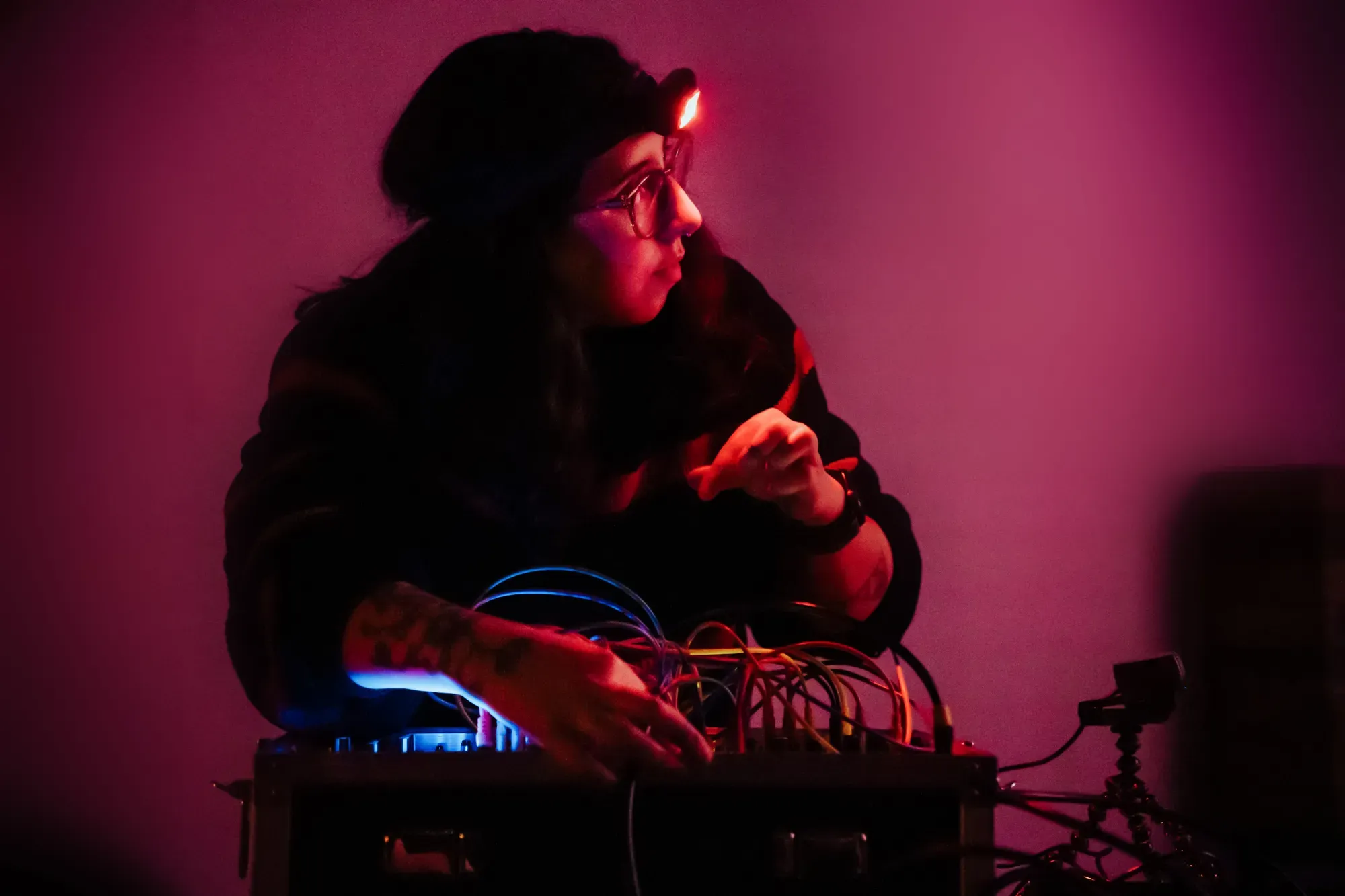
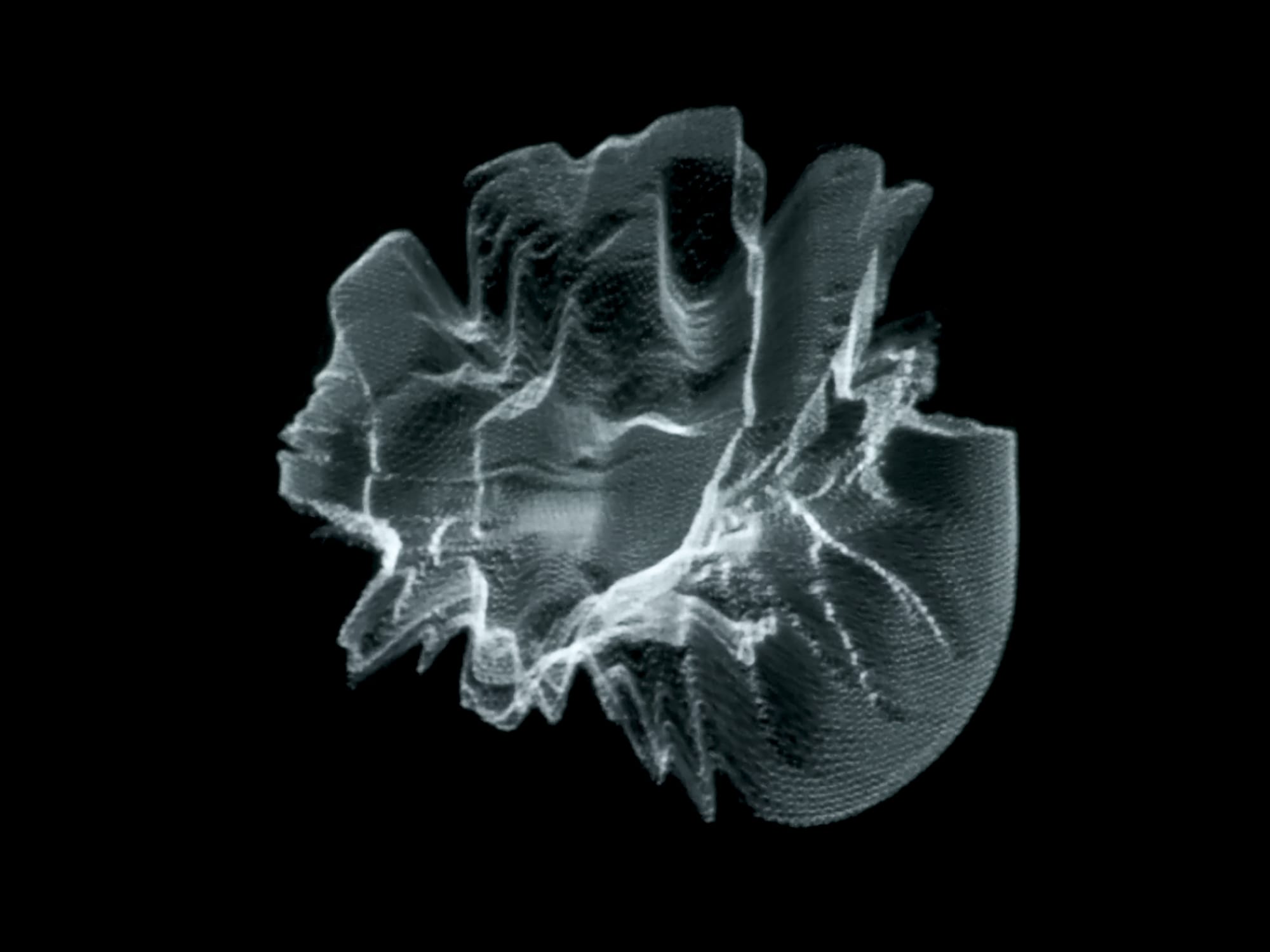
In 2017, I did an artist residency at Signal Culture, where I recorded three video works using some of the analog video equipment there. Looking for material for some new prints, I decided to revisit these works, now almost 10 years after their initial recording. I captured a series of 16 stills from each video, for a total of 48 different images, which I printed on squares of matte cardstock. For each Physical Object subscriber, I selected a triptych of three prints. No two people received the same selection of images. As usual (a carryover from the Zine Club Mystery Objects), the envelopes also included a small numbered edition card with a short message and some notes about the Object.
The two main pieces of Signal Culture's equipment used in these works were the Jones Raster Scan and the Wobbulator.
The Jones Raster Scan
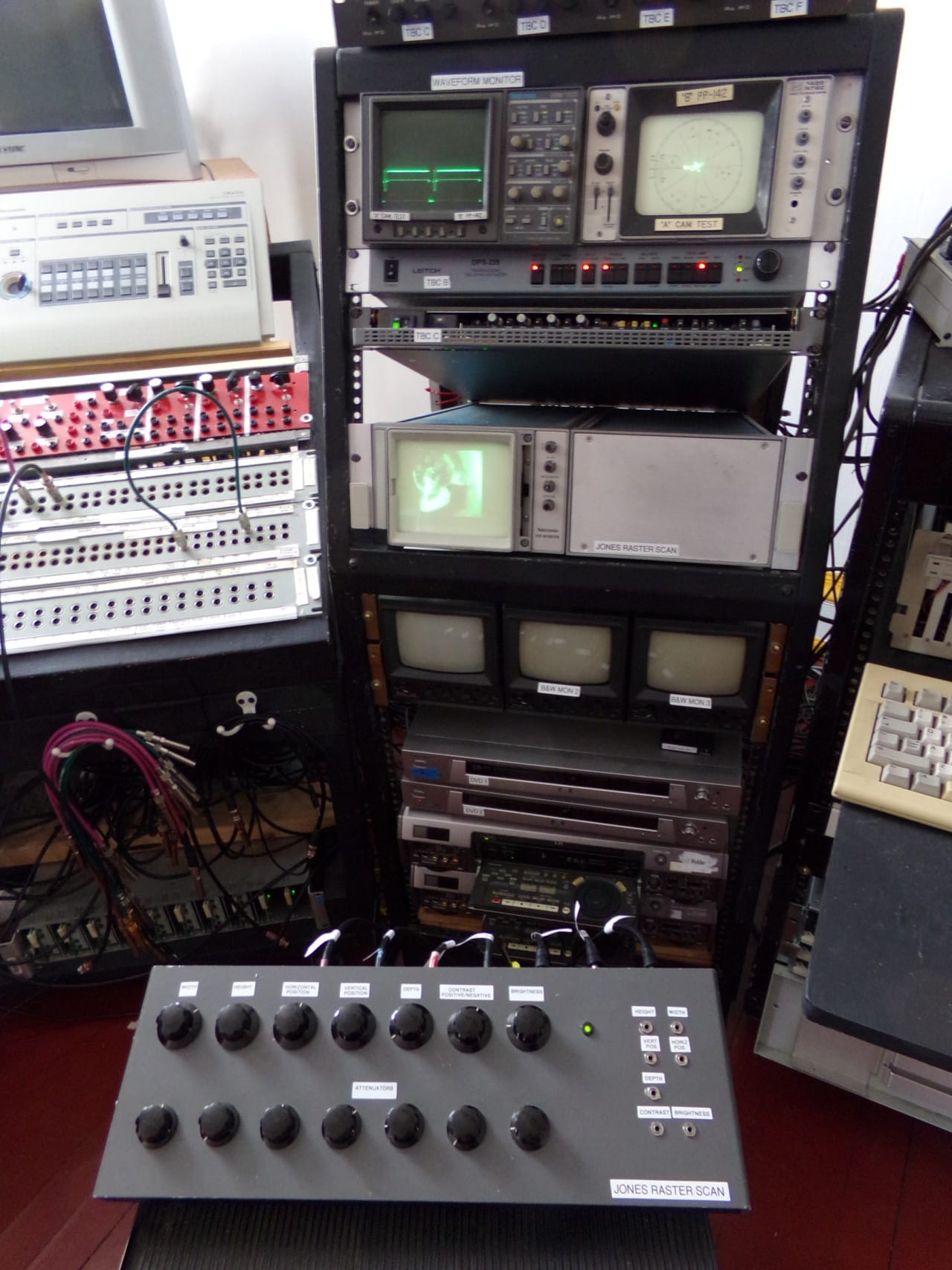
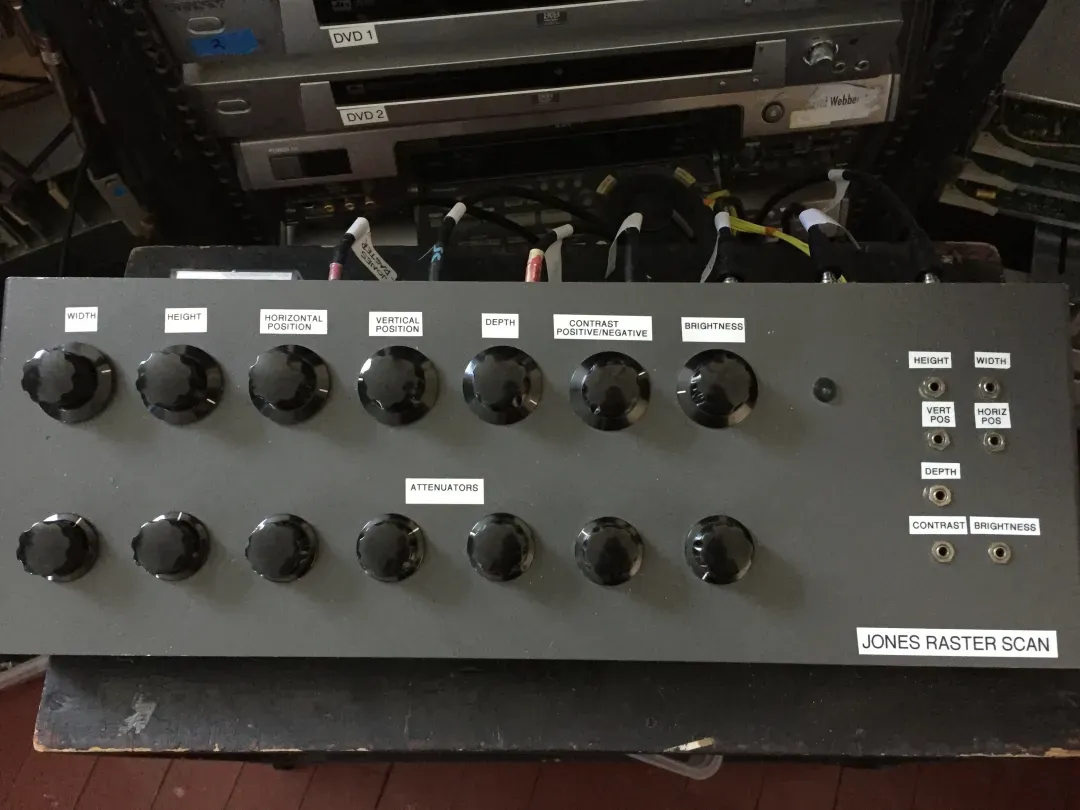
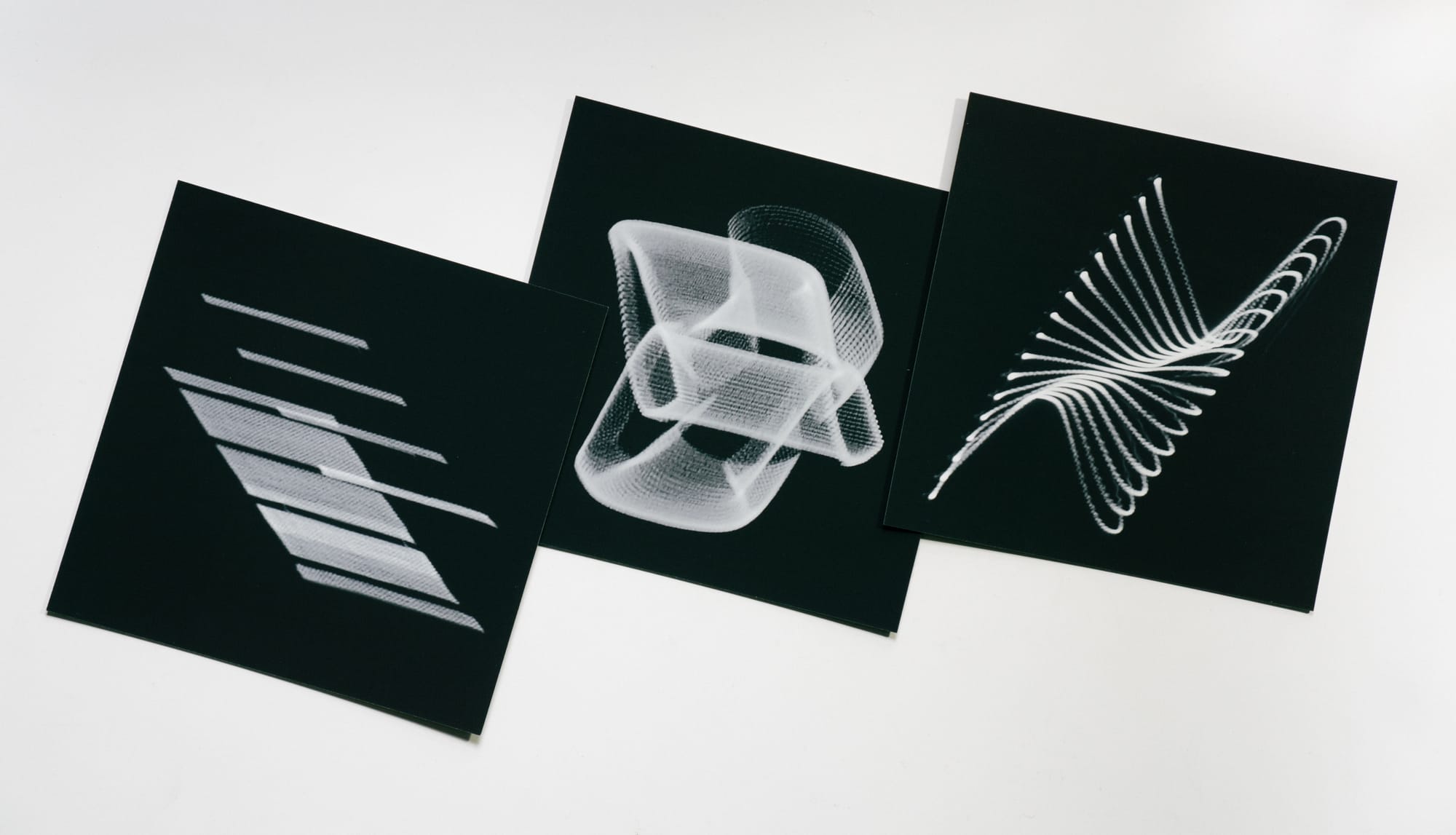
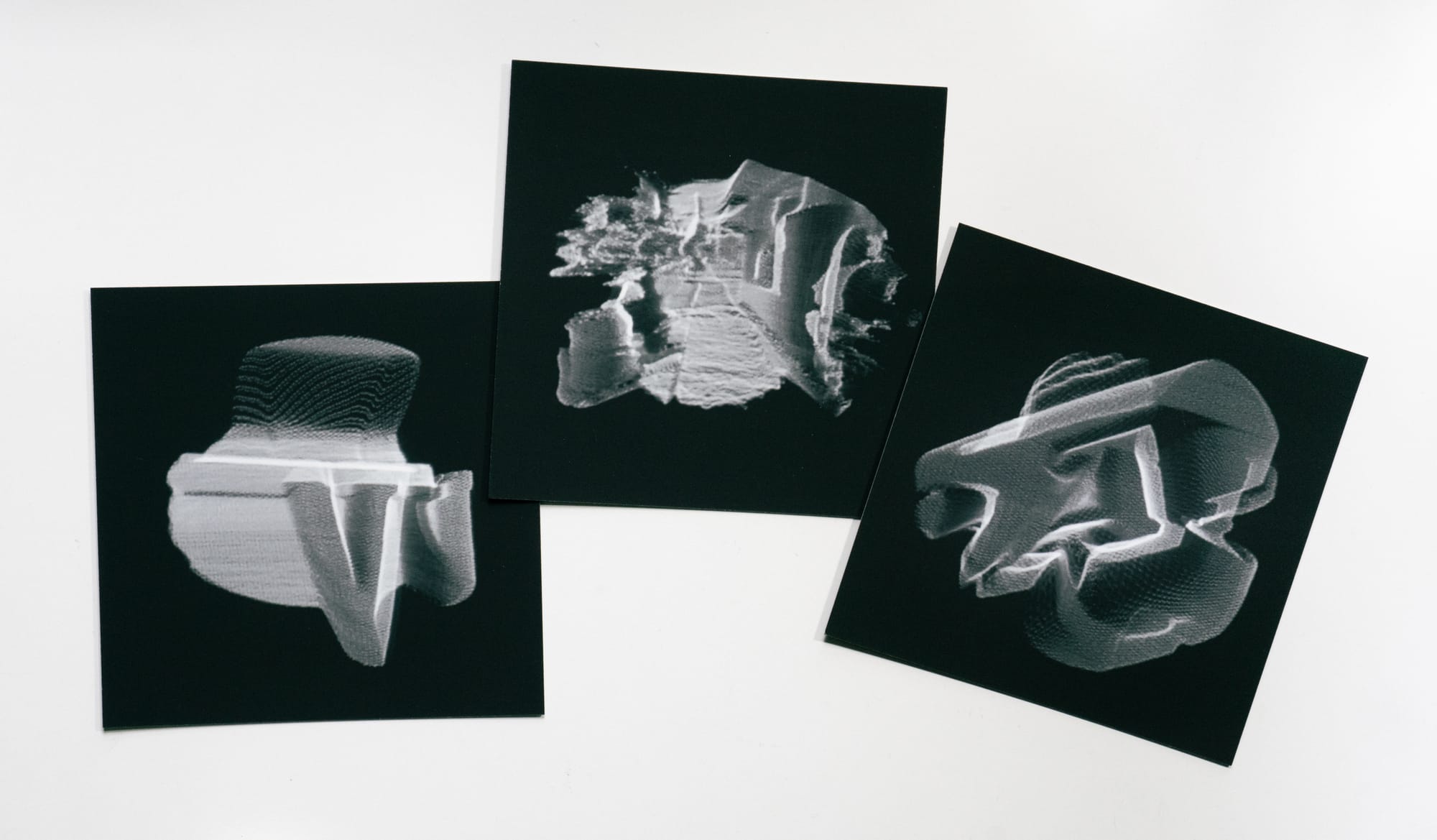
The Jones Raster Scan takes in an analog video signal and converts it for display on an XYZ oscilloscope. (The Z in XYZ refers to control of the beam's brightness.) Cathode ray tube (CRT) televisions display an analog video signal raster by scanning one horizontal line at a time, very fast, to create a rectangular image. An oscilloscope is a different kind of cathode ray tube with a beam that can move freely in the X and Y directions, rather than being locked into the rectangular raster shape. If the oscilloscope is able to run fast enough, it can be coaxed to display a black-and-white video raster, while allowing the raster to be manipulated and distorted by mixing in additional signals. The Jones Raster Scan, sometimes referred to as the Jones Raster Manipulator, was built to allow this kind of raster manipulation for artistic purposes. It works in a very similar way to the more widely known Rutt-Etra Scan Processor, as well as an early motion graphics tool called the Scanimate. Media artist Sara Hornbacher commissioned Dave Jones to build the device, and later donated it to Signal Culture.
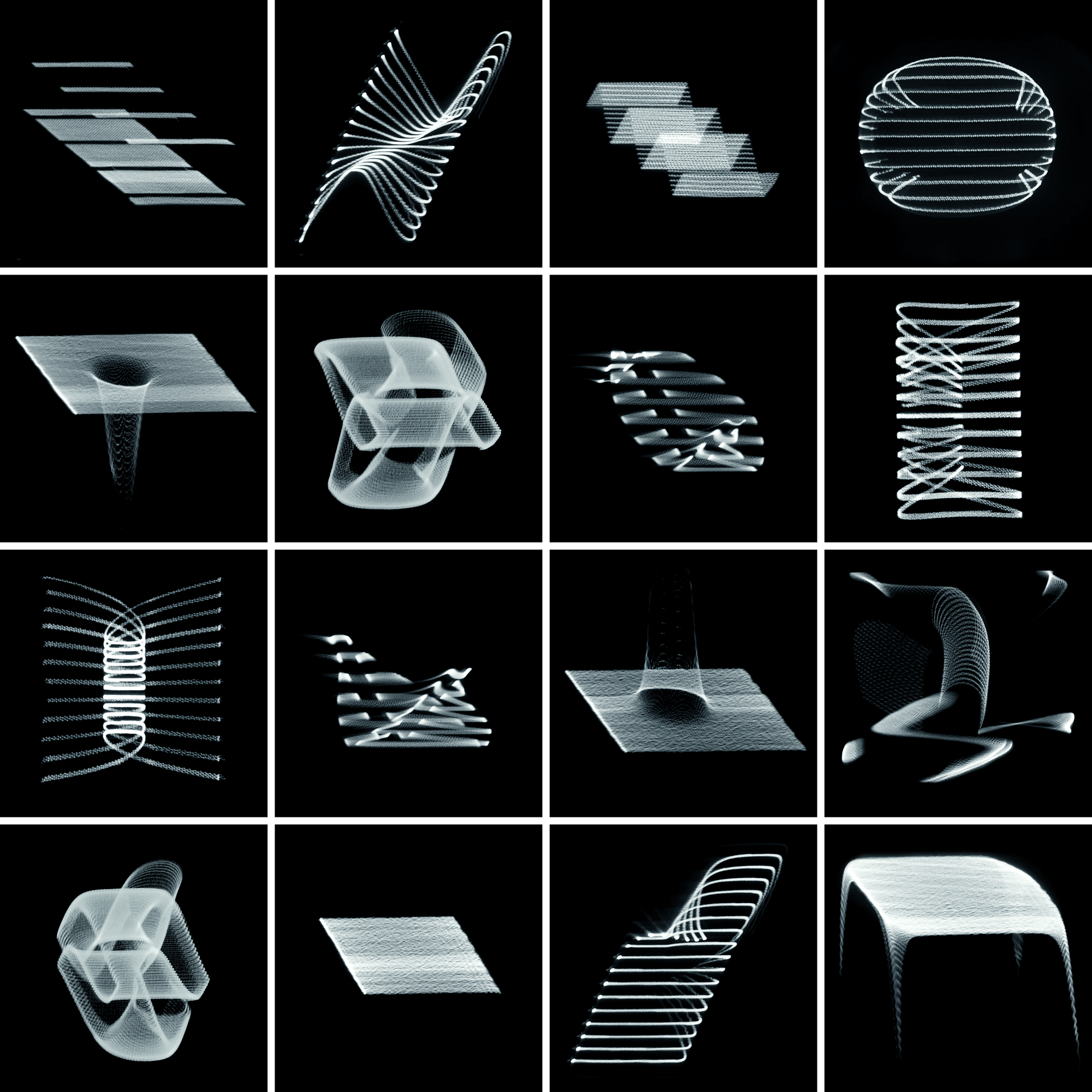
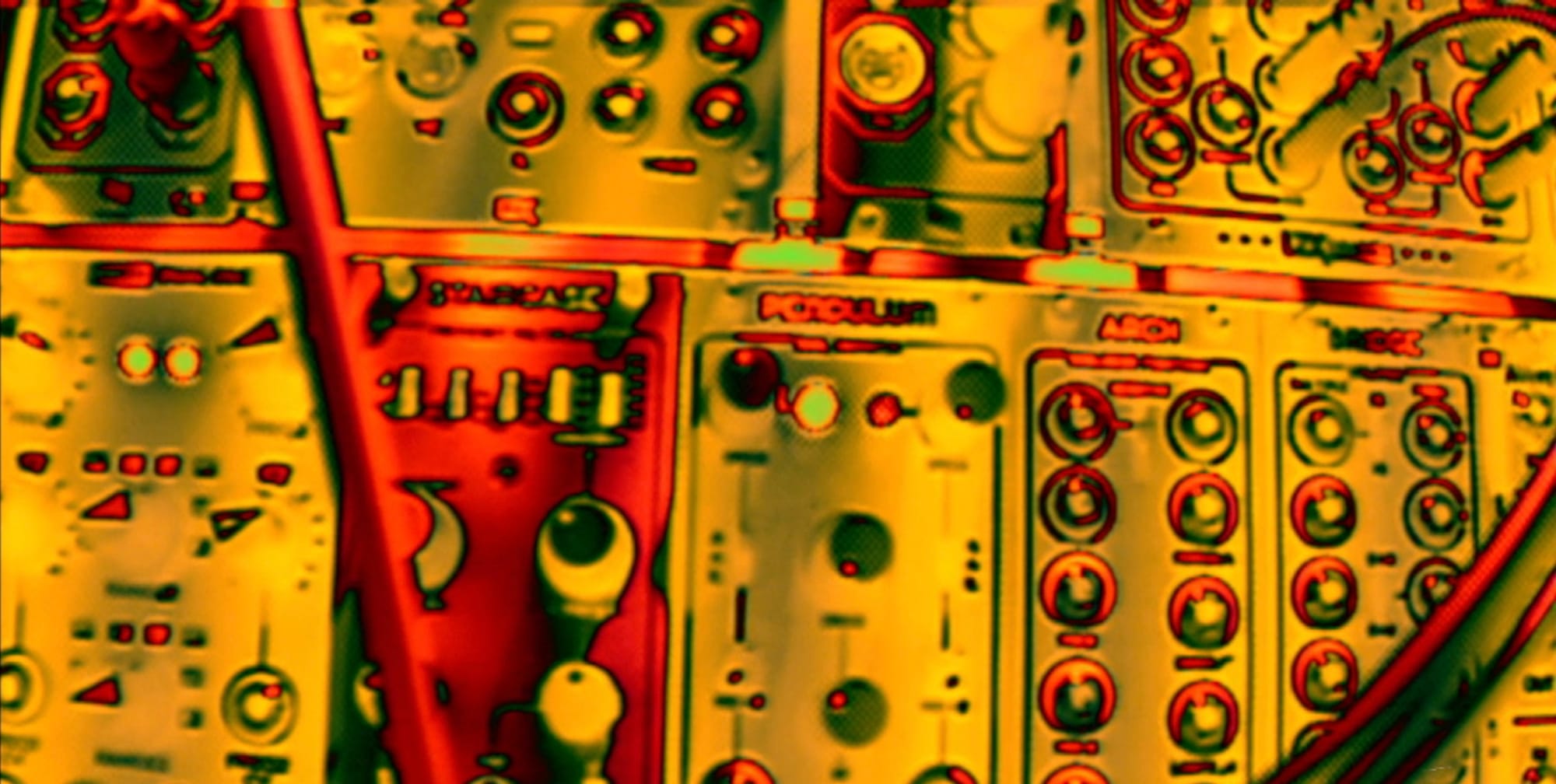
In Raster Scan Forms, I used the wipe patterns on video mixers (without any input signals), along with a modular synthesizer, to generate abstract geometric forms on the oscilloscope screen. I aimed to create a sense of perspective and depth by making forms which appear to fold and warp in space, though the imagery is all just 2D.
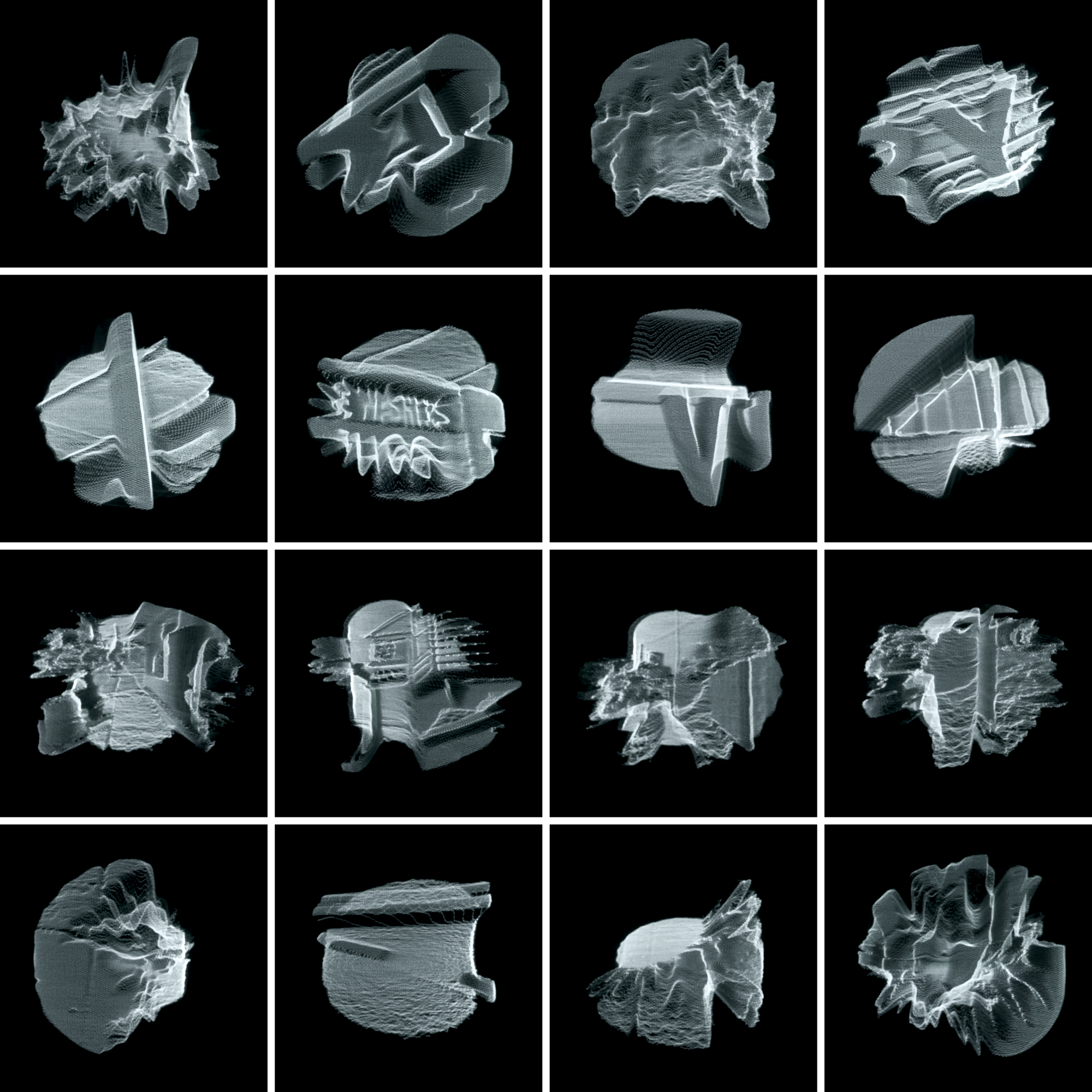
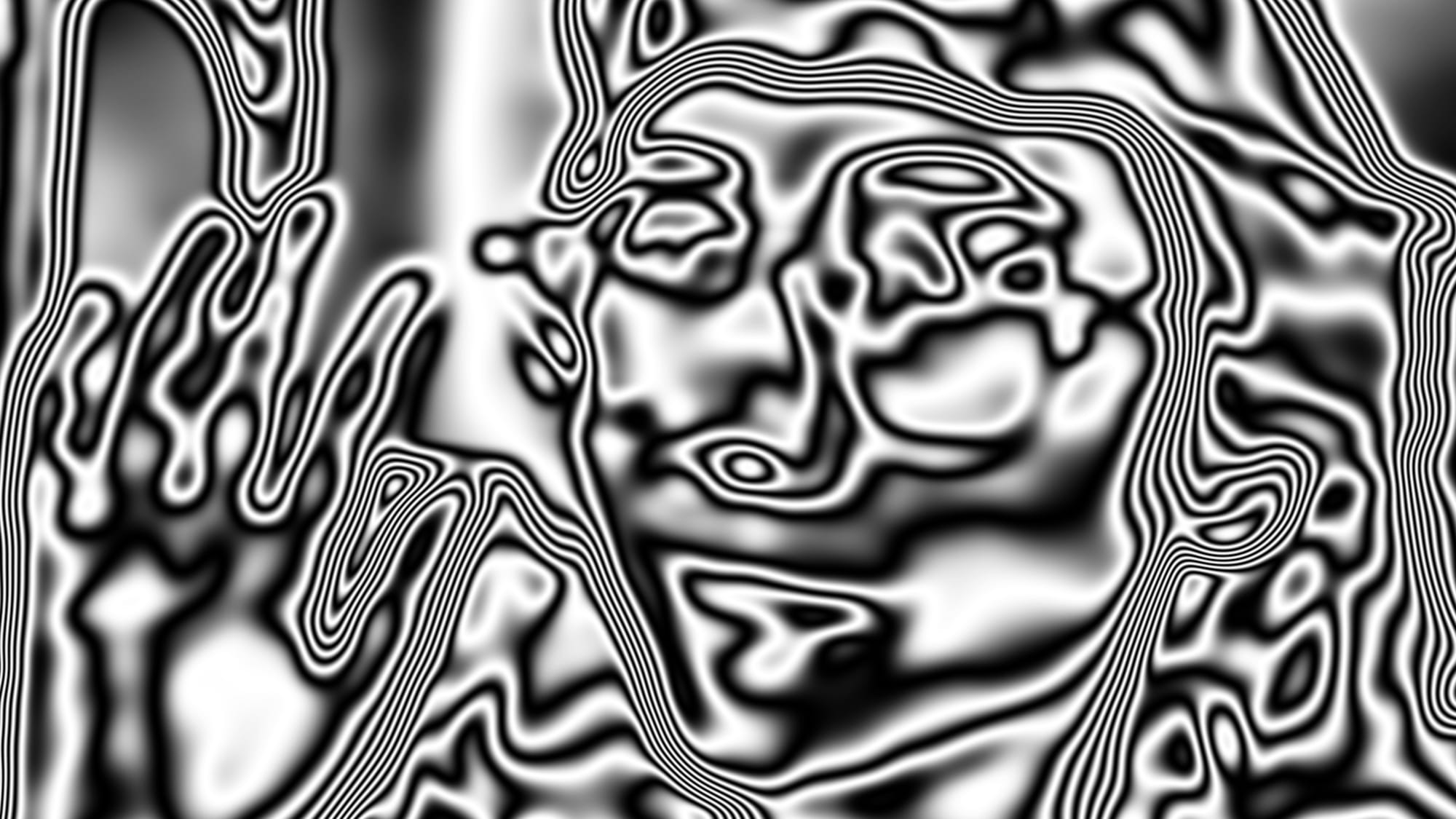
In Raster Scan Wanderer, I used footage I recorded while wandering around the somewhat desolate town of Owego, NY, where Signal Culture was located at the time. I fed the source video's brightness into the X and Y inputs, so that brighter areas appeared to push outward from the center, creating a strange sense of perspective. I also used a circular vignette effect, so that the image appears to be contained in a sort of fish-eye sphere. I found it especially interesting to notice how the text in the footage (from random signs around town) appears embossed.
The Wobbulator
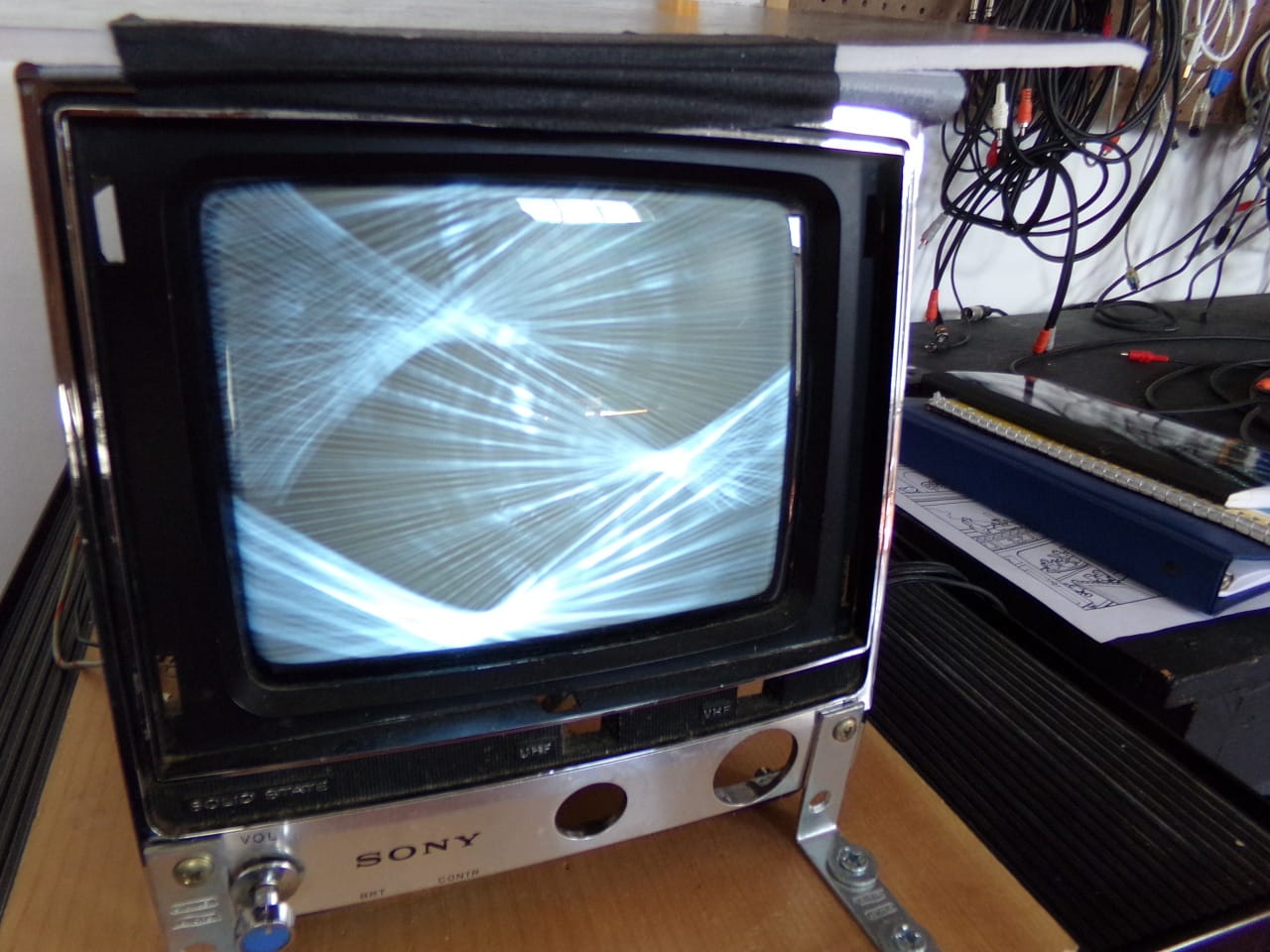
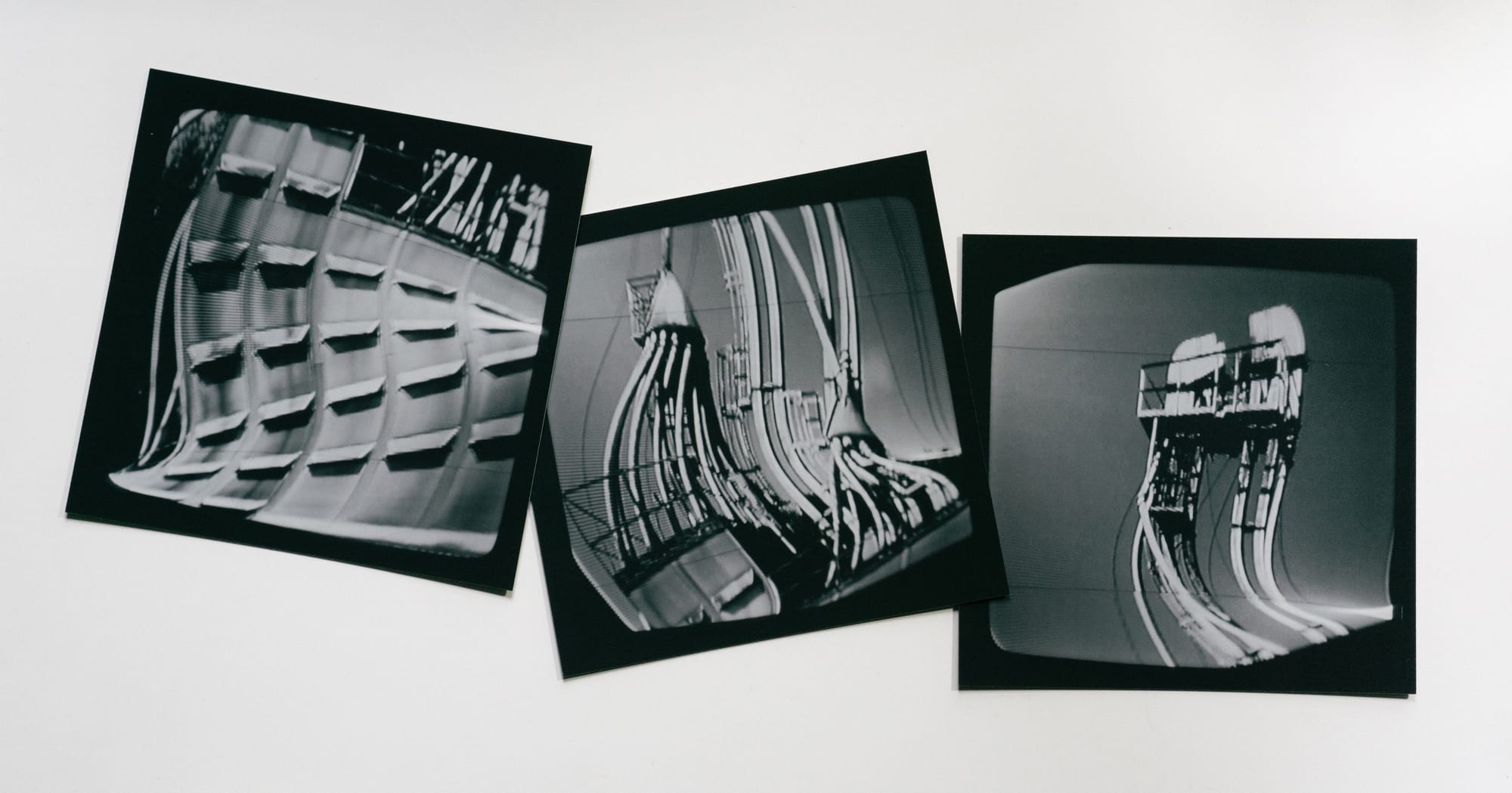
The Wobbulator is a modified black-and-white CRT television. In addition to the normal, built-in electromagnetic coils that allow it to produce the video raster (again by scanning one horizontal line at a time) with its electron beam, someone added more handmade electromagnets inside to bend and warp the video image. It has three added coils:
- A horizontal coil that bends the image by displacing lines of video in the X direction
- A vertical coil that displaces lines of video in the Y direction
- An "S-coil" that bends the image in a squiggly diagonal way
Like the Raster Scan, the Wobbulator also allows you to manipulate the raster of the video, albeit in a more limited set of directions and frequencies. The control signals for the added coils need to be amplified in order to have a significant effect on the image; this is accomplished with a series of audio amps (which were originally intended to drive passive speakers).
I shot footage of a granary near the freight train tracks in Owego and ran it through the Wobbulator to create Wobbulated Granary. As with my other pieces in this series, I manipulated the raster by feeding in control voltage from the modular synthesizer. To create a modulation pattern that slowly scrolled and undulated, I used a sine wave that was running at almost the same frequency as the vertical scan rate, but unsynced. I also slowly modulated the amplitude of my control voltage, so sometimes the image appeared almost normal, and other times it was wobbulated into oblivion.
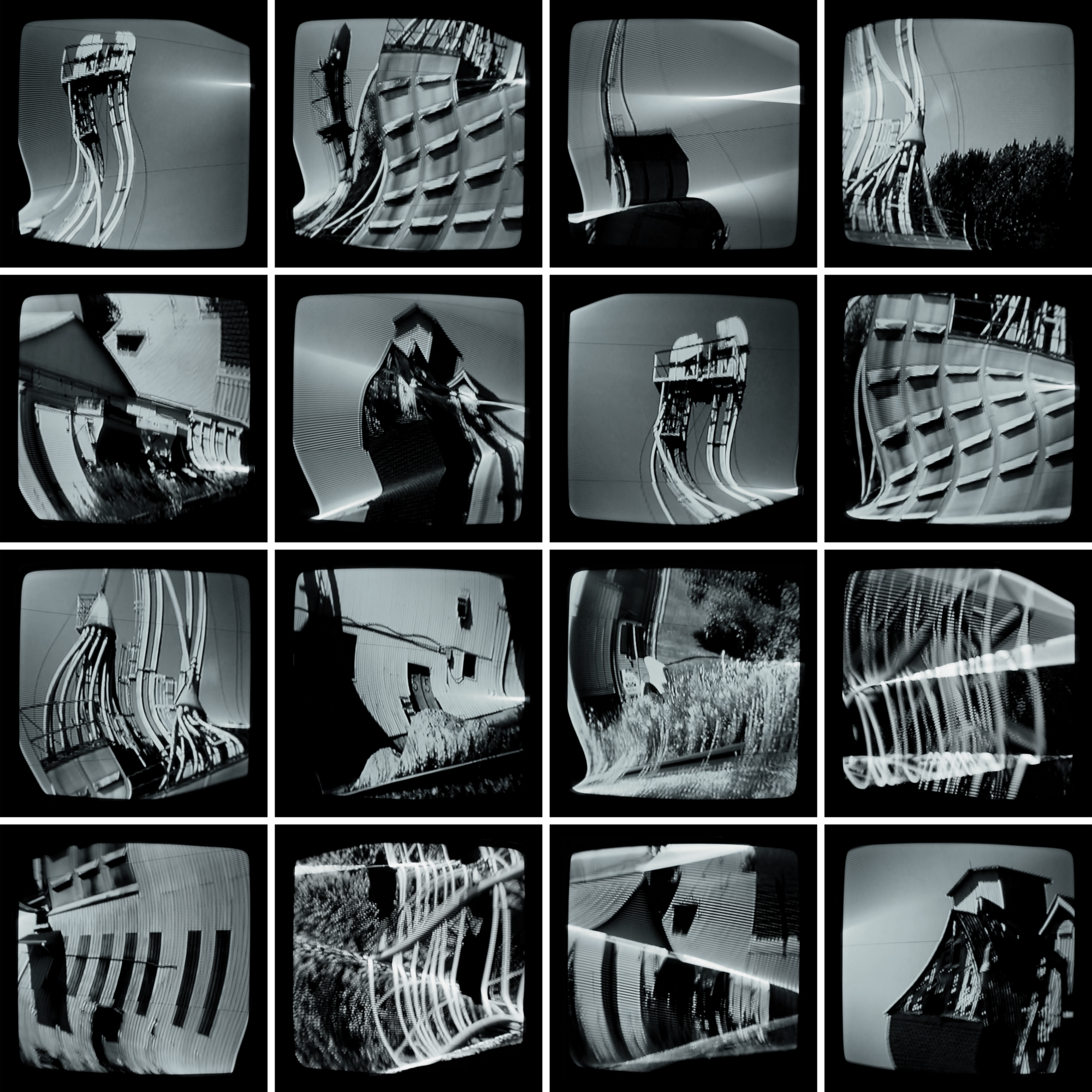
In all three of these pieces, I recorded the output from the cathode ray tubes with a digital SLR camera, set to a shutter speed of 1/60 (to get as close as I could to the 59.94 Hz analog video scan rate). The Wobbulator's output was already monochrome, but the oscilloscope showing the output of the Jones Raster Scan had a green phosphor; I desaturated the footage with digital post-processing. I enjoy the resulting ghostly glow of the phosphors, and how they appear luminously translucent.
Signal Culture 🩶
The Signal Culture organization has been a great resource to me and many other media artists, as well as a source of inspiration and community. They maintain a unique array of analog video tools, some of which can no longer be found in working condition anywhere else. And they've managed to continue operating without charging any fees for applicants or residents.
Since my residency in Owego in 2017, they've relocated twice. After several years in Colorado, they recently returned to upstate New York. I think they plan to resume offering residencies for artists, toolmakers, and researchers soon, so if you're interested, you can visit their website and subscribe to their mailing list to hear from them when they open up applications.*