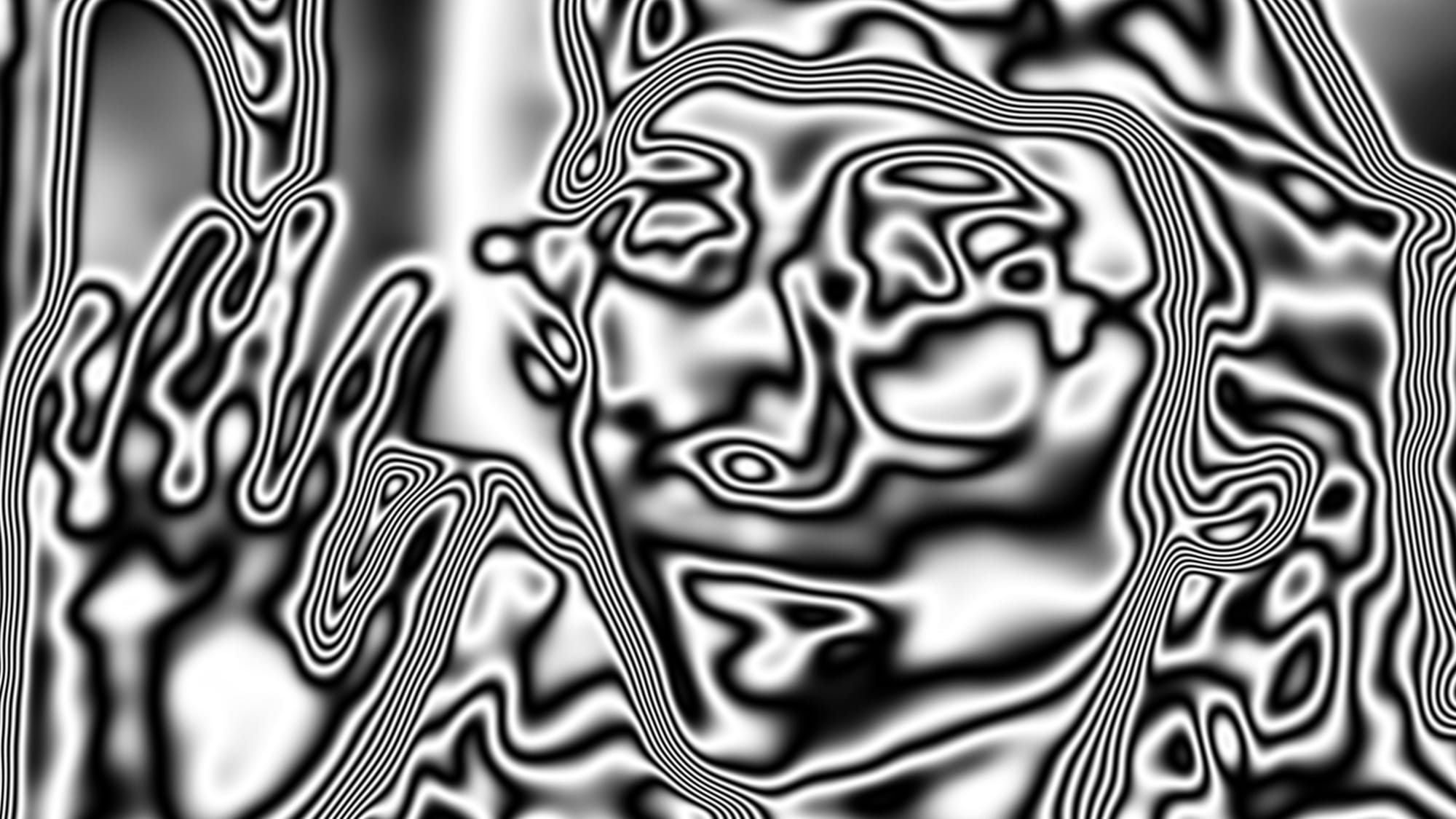
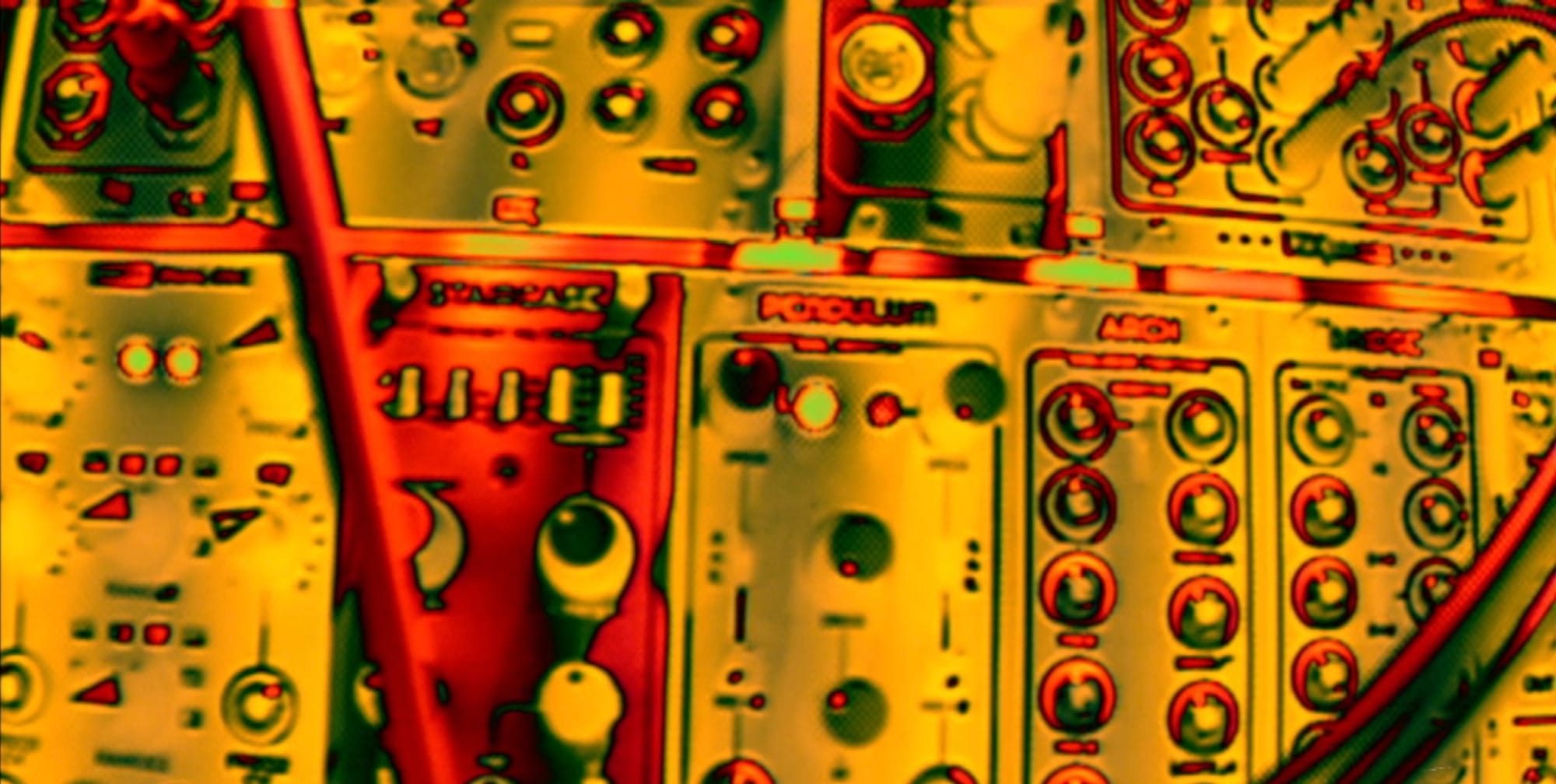
Video as a Frequency Modulation Source


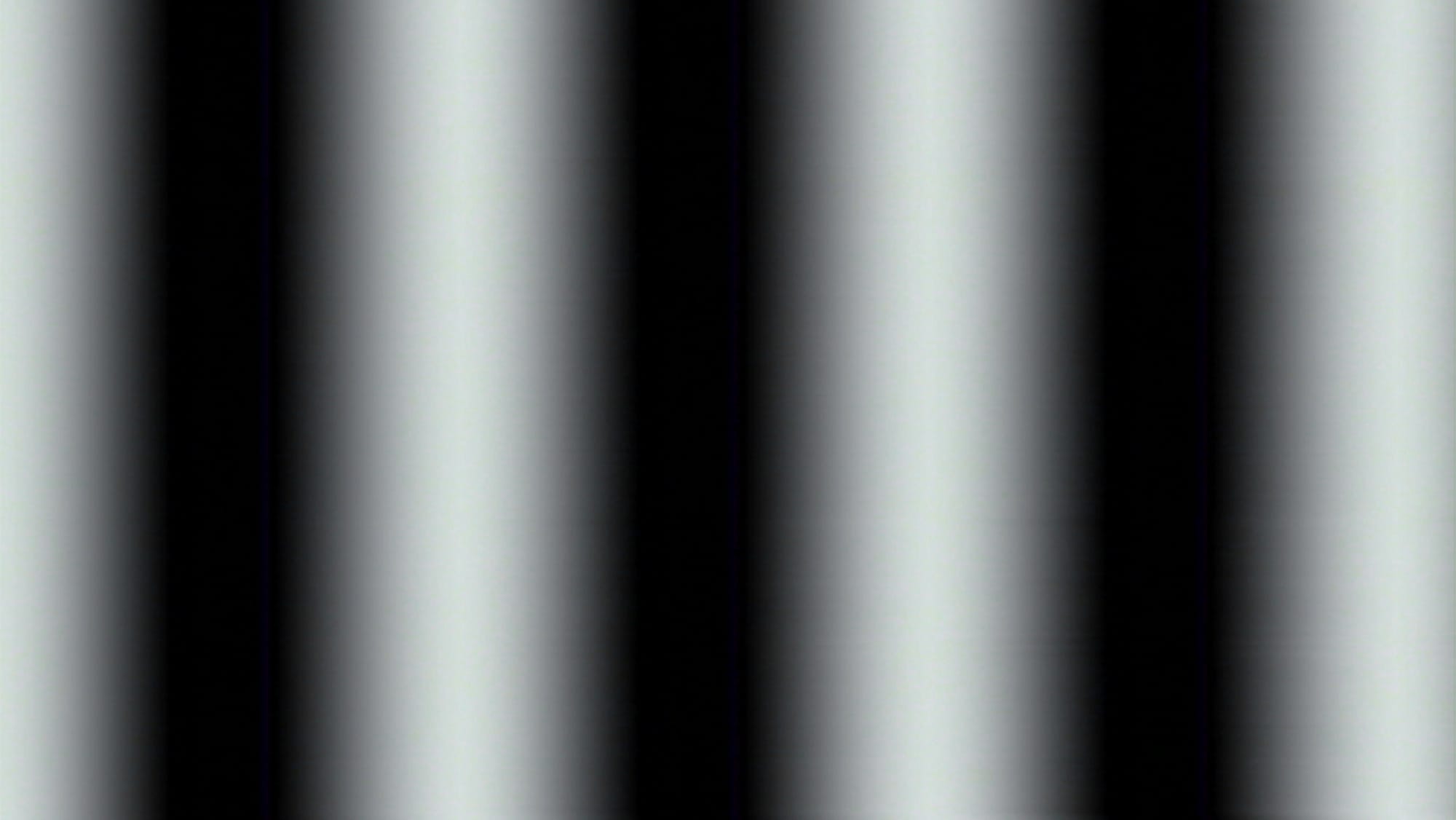
Using a video signal as an FM source is a technique I use a lot in modular video synthesis. In that context, it's very easy to do. First, take a video oscillator and set it to "horizontal sync," so it resets with each horizontal line of video. (Confusingly, "horizontal" sync actually produces vertical stripes.)
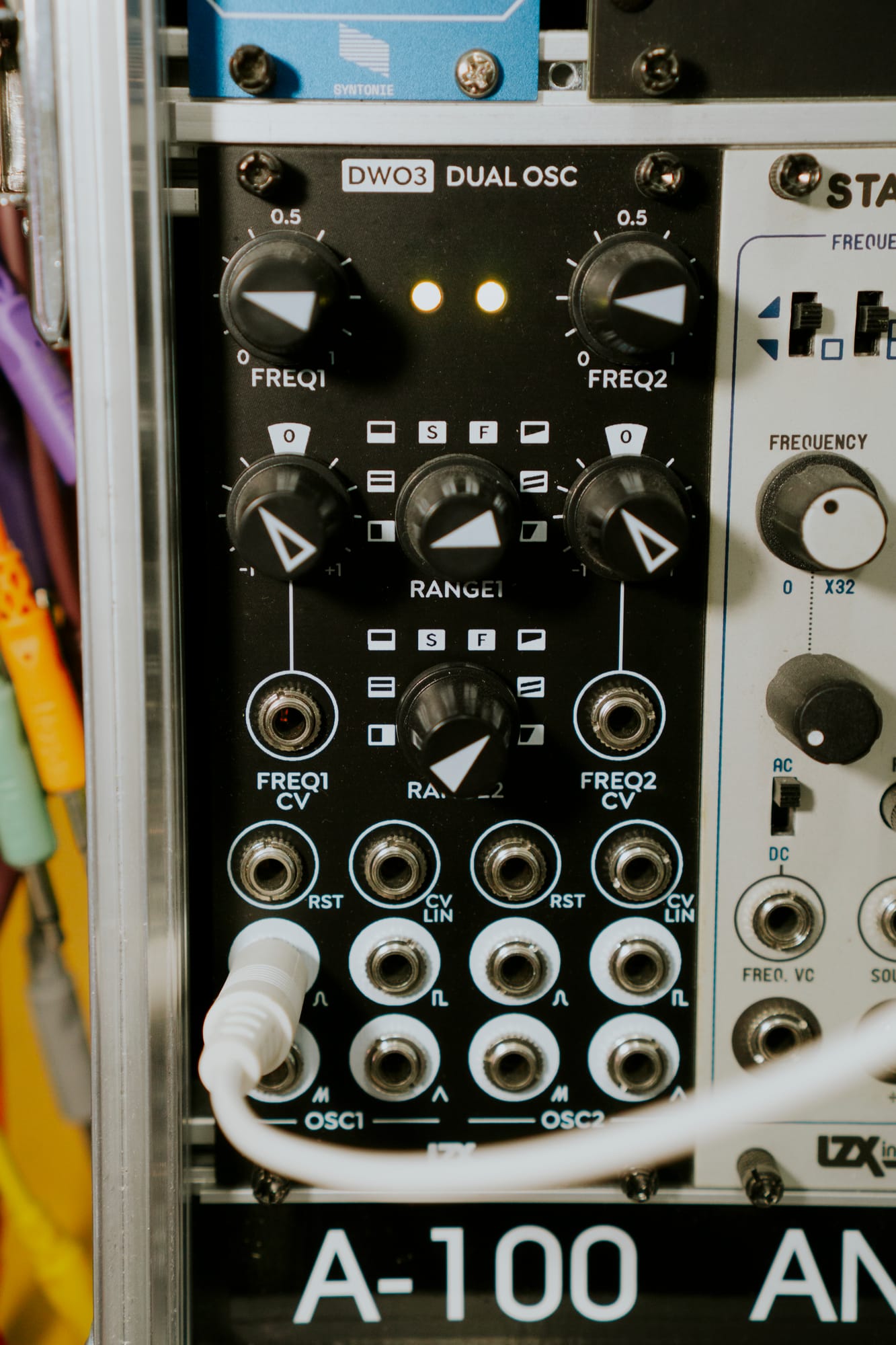
Then take your video source image — in this case I'm using a slightly blurry circle*...
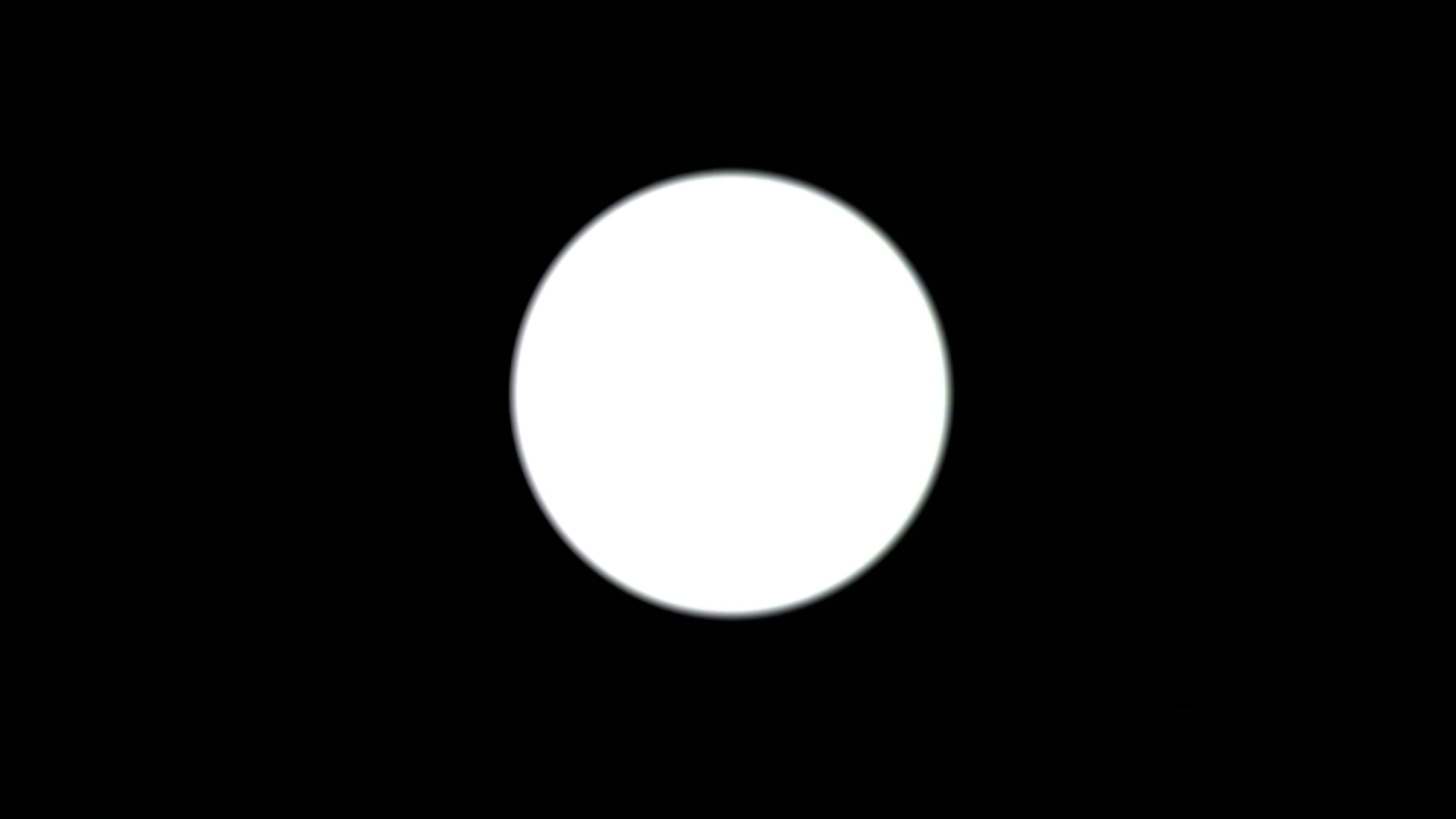
...And feed it into the "frequency" input of the oscillator. With this effect, the brighter the source image, the faster the oscillator will cycle. Each line is processed individually, left to right. If there is zero brightness all the way across a line, the oscillator will remain in sync across each line. Like in the top and bottom of this image, because that's where the source has a bunch of lines that are all black.
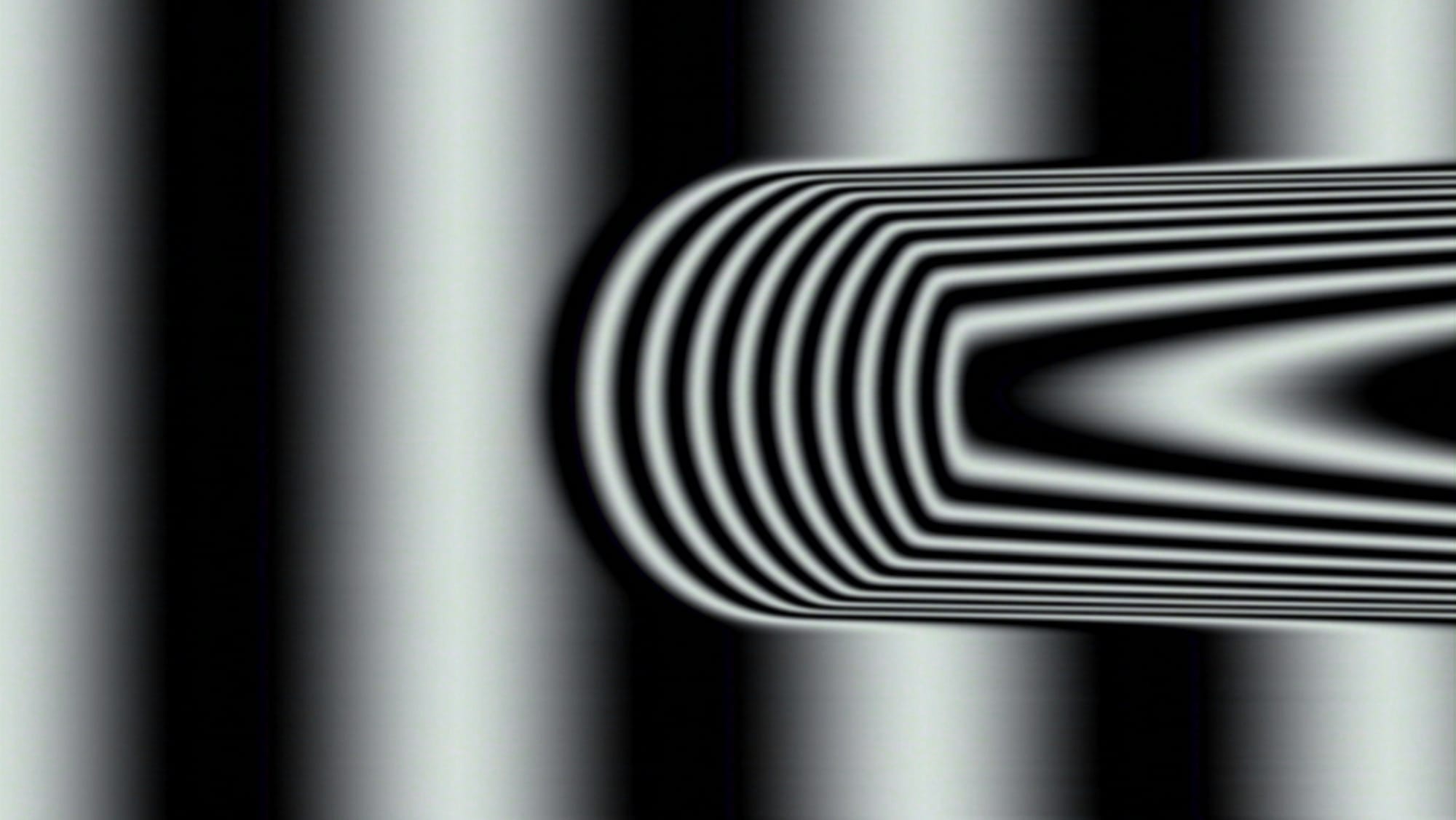
But in the middle, things start to get interesting. If you start by looking at the image to the left of the circle, the stripes are all aligned together — in "sync." (This is because the oscillator was reset at the left edge.) Then in the center, where the circle is, the stripes are closer together — the oscillator is cycling faster. Then, on the right side of the circle, the source image returns to black. But in each line, since the oscillator's pattern was modified, even though it returns to the original speed, it's no longer aligned with the stripes on the top and bottom. In other words, it "remembers" its phase (where it was in its repeating cycle).
We will come back to this idea of "phase" and maintaining the oscillator's continuity later on, and we'll see what happens when we stop working with analog oscillators that have this behavior built-in. But first, let's take a step back, and dive into some background concepts.